Skip to the table notes
Independent tabletop notes [email protected]

Table notes / issue 01

Make the table easy to enter.

Zorimavel is a practical reading room for tabletop game nights: how to begin clearly, explain without rushing, and leave space for everyone at the table.

Information and prompts only. No shop, booking desk, or paid membership.

An overhead board game table with tiles, wooden pieces, dice and a score sheet
Table state A visible first turn
01Say what the game asks of us.

Cooperate, negotiate, race, or solve: name the shared shape before explaining a rule.

02Show one turn before the whole system.

A small example gives new players a handhold without turning the opening into a lecture.

03Keep a way back in.

Pause points, reminders, and kind questions make it easier to rejoin after a missed detail.

Choose the table

One room. Different ways to begin.

Pick the kind of table you are setting tonight. The note changes, but the goal stays the same: make the first ten minutes legible.

01 / teaching a new game

Give the table a map, not a monologue.

Open with “By the end, we are trying to…” Put the group objective in one plain sentence.

Then show One round in miniature: choose, resolve, reset. Let components do some of the explaining.

Save for later Edge cases, unusual cards, and scoring subtleties can arrive when they become relevant.
Use the table toolkit

A game has layers

Read the table from the pieces outward.

Before a group reaches for a rulebook, a few visible structures can make the game feel less opaque.

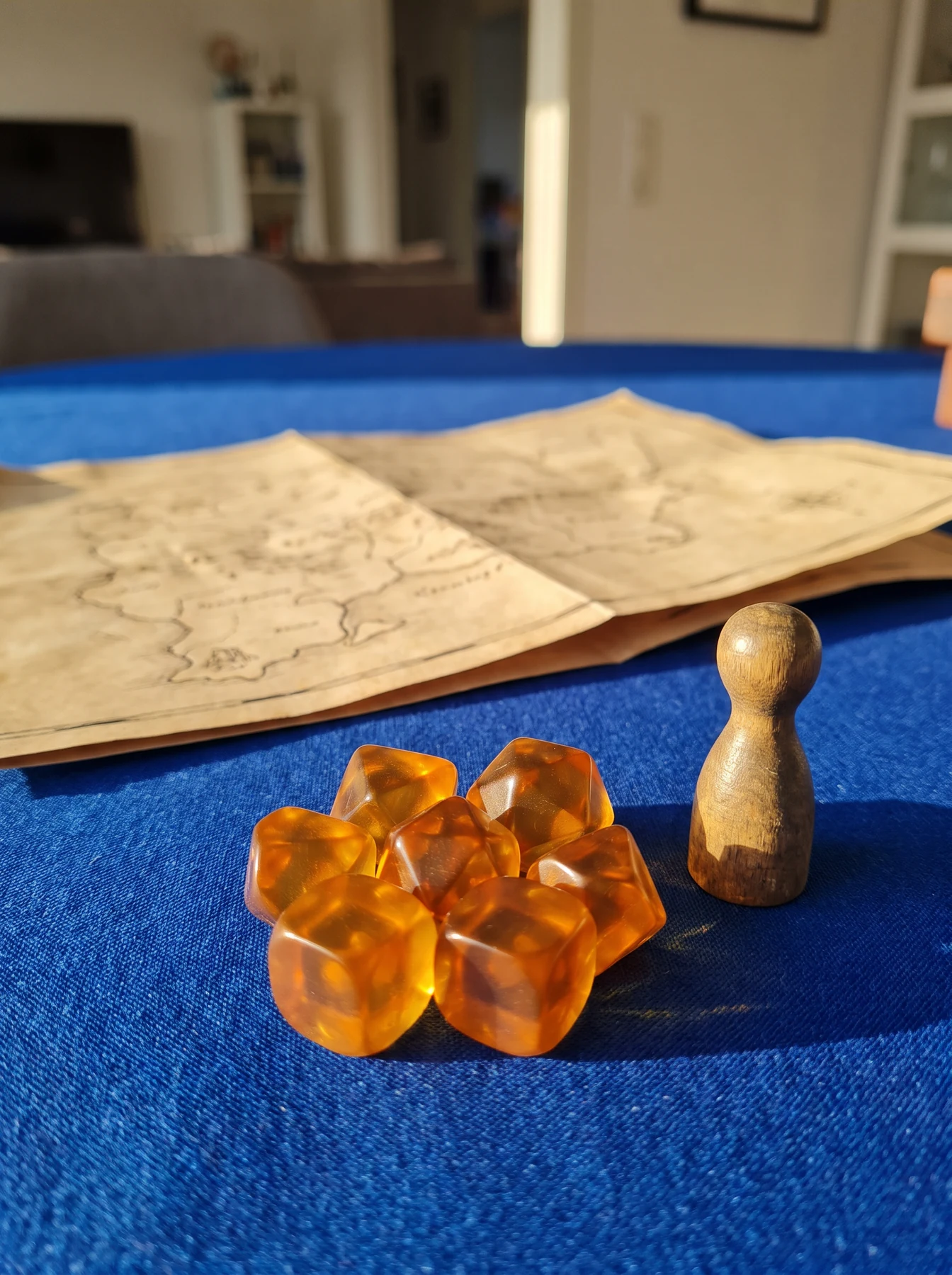
Amber dice and a wooden pawn next to a game map
01 The objects people can touch
01

The play area

Separate personal pieces, shared pieces, and the current decision. A clear boundary reduces the need to remember everything at once.

02

The loop

Point to the repeating beat: choose, reveal, spend, score, or tidy. Most rules live inside that rhythm.

03

The question

Give each turn a useful question: “What do you want to protect?” is easier to enter than a page of permissions.

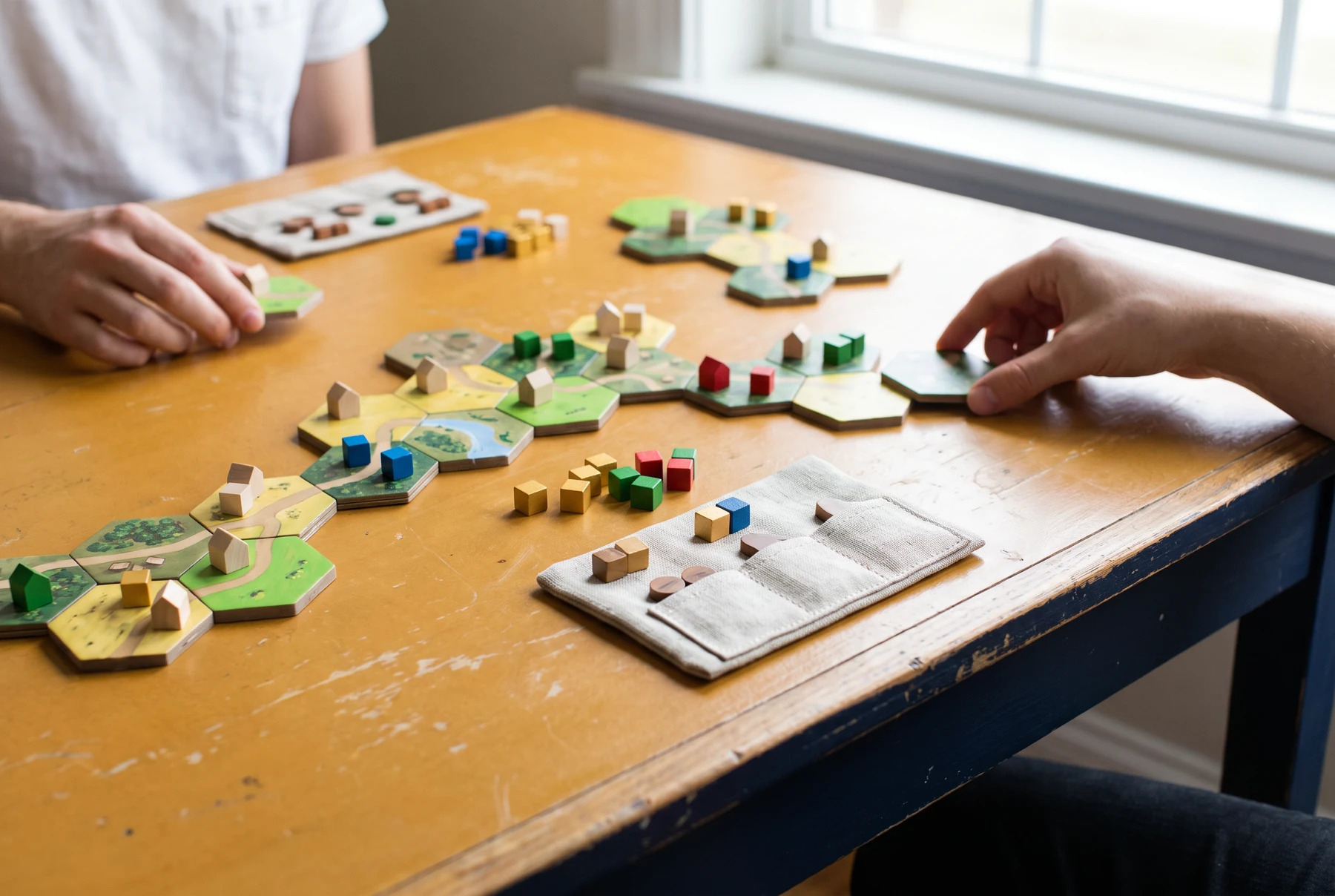
Modular landscape board game with small wooden houses
03 The shared landscape

The twenty-minute reset

When a game stalls, return to the last clear choice.

Use a reset as a small wayfinding exercise. It is not an authority move; it is a chance to make the situation visible again.

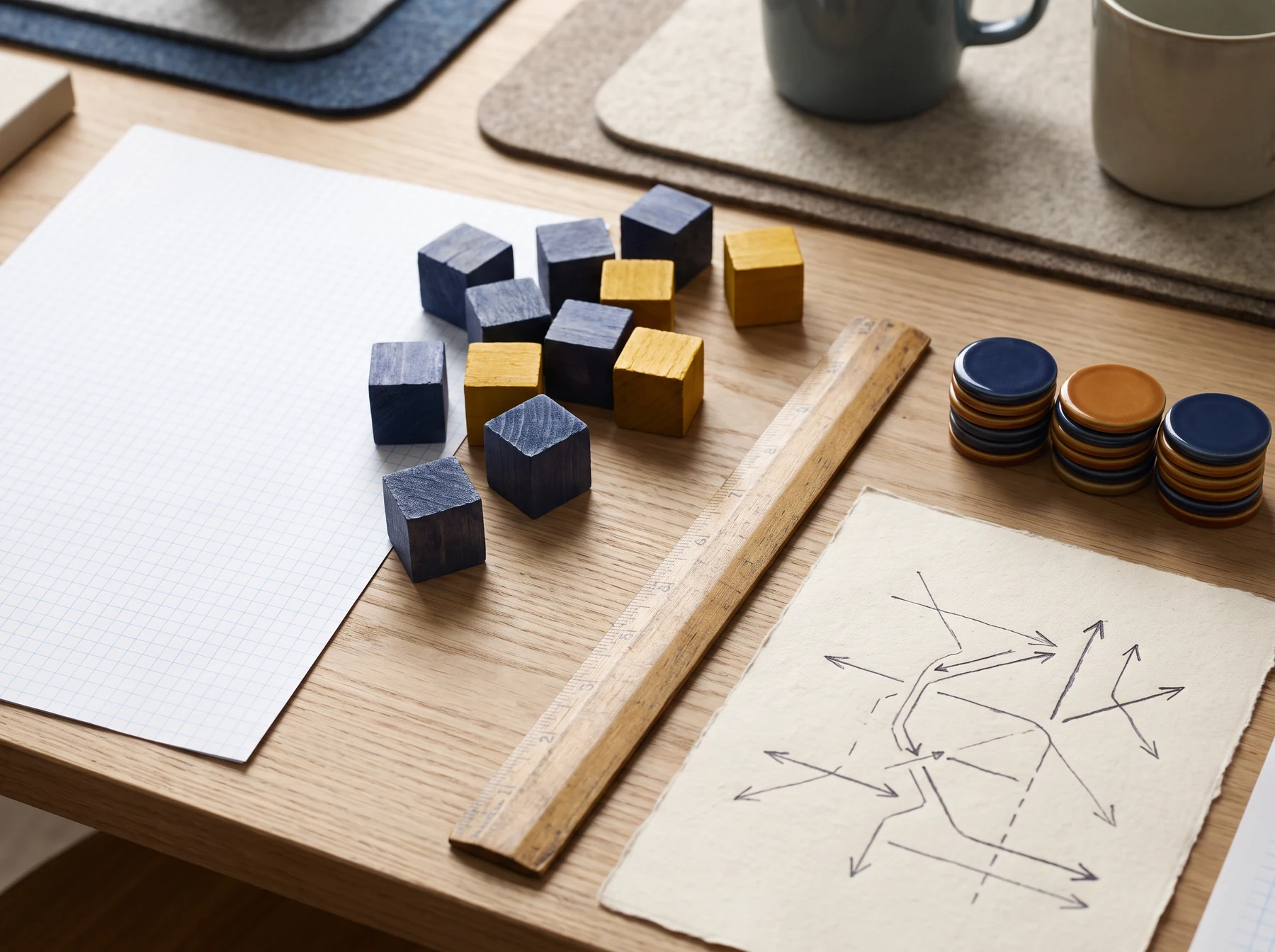
Game planning desk with wooden cubes, notes and tokens
Tools can be quiet.
  1. 01

    Name the pause

    Say what happened without blame: a rule is unclear, a turn was missed, or the room needs a moment.

  2. 02

    Find the last known point

    Look at the board together. Which choice or effect was the last thing everyone understood?

  3. 03

    Read only what is needed

    Check the relevant rule, card, or player aid. Do not restart the entire explanation unless the group asks for it.

  4. 04

    Say the next choice aloud

    Agree what happens now, then offer the decision back to the player whose turn it is.

A shelf with abstract game boxes, wooden pieces and a folded yellow cloth
Shelf note Leave a graceful alternative within reach.

The table library

Keep a few useful things near the game.

Not every tool belongs inside the box. A pencil, blank cards, a small tray, and a quick-reference surface can support different ways of paying attention without adding clutter.

  • A visible place for shared resources
  • Blank note cards for reminders or names
  • A quiet way to mark a paused rule
  • A second game suggestion, without pressure
See the hosting notes

Build a table card

Match the opening to the people in the room.

This little selector does not recommend a game. It simply gives you a short hosting prompt based on the time and familiarity you choose.

Familiarity
Time shape

For hosts

Good hosting is a series of small invitations.

You do not have to perform the entire game for the room. A good host makes the next step clear, watches energy as well as rules, and treats a change of plan as ordinary.

Share a table note
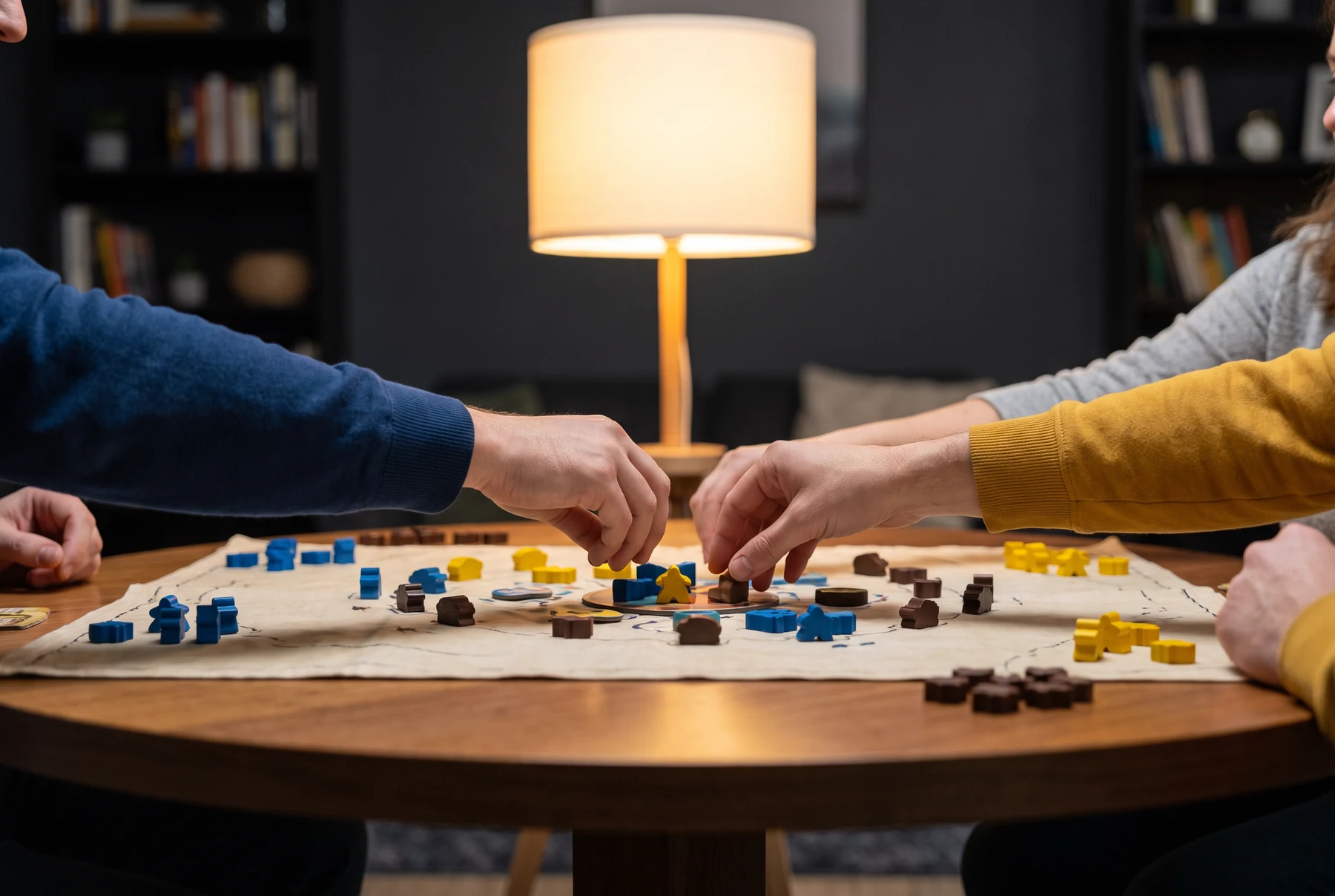
People playing a tabletop game around a round table
Make room for the question before the answer.

A more readable table

Small adjustments can change who gets to play comfortably.

Say what changes

When a state changes, name it out loud. A shared verbal update can help everyone track a busy table.

Keep pieces reachable

Put common components where people can reach them, or offer to move a piece without making it a spotlight.

Reduce competing noise

Let one rule explanation happen at a time. Side talk can wait until the current question has a clear home.

Make breaks ordinary

Say before play begins that anyone can request water, a stretch, a recap, or a moment away from the table.

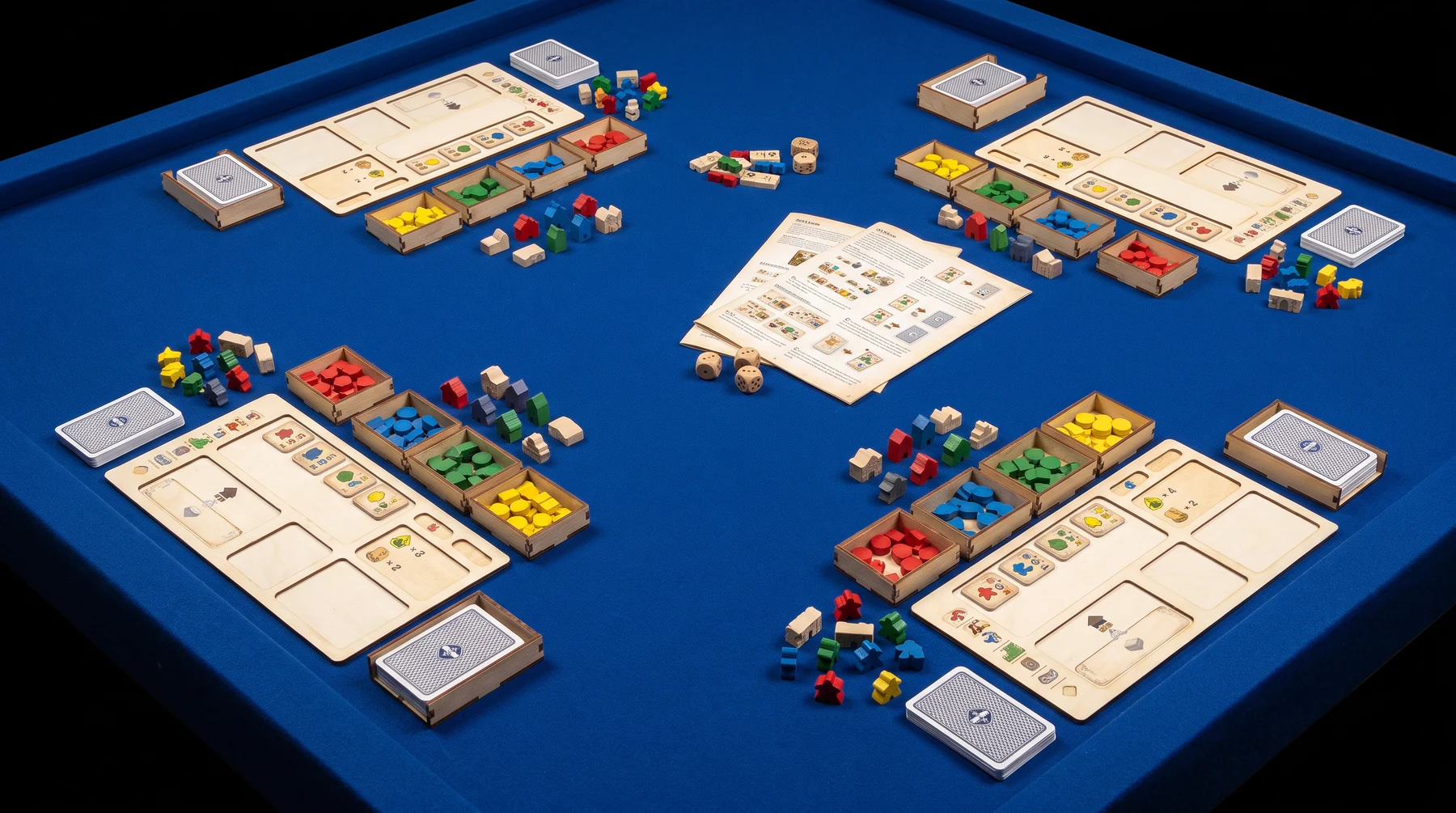
Wide overhead game tableau with player boards, cards and colourful pieces
Use a simple reference point in the centre of the table.

A shared centre

Let the board carry some of the memory.

Turn-order markers, reference cards, a visible discard area, and clear resource pools are not just neatness. They let people look down, orient themselves, and return to the conversation with less effort.

1

reference point can be more useful than another explanation.

Questions, answered

A reading room, not a rule authority.

These notes are prompts for considerate play. Your game’s published rules and your group’s own agreements still matter.

No. Zorimavel does not publish official rules, rulings, errata, or game-specific instructions. It is a set of general hosting and learning notes for tabletop groups. For a particular title, use the rulebook, publisher materials, and any clearly identified official support channels, then decide together how your own table wants to proceed.

It is reasonable to name that the game is not landing and to ask what would help. A rules reminder, a short break, a cooperative adjustment, or choosing a different game can all be valid options. Treating a change of course as normal is often more welcoming than insisting that everyone finish because the box is already open.

No. Zorimavel does not sell games, arrange events, process bookings, operate a game library, promise a response time, or collect payment for access. The website is an information resource. If you are looking for a local venue, group, retailer, or event, choose and contact an independent provider in your area on your own terms.

Pause the game at the moment the uncertainty matters, state the question as neutrally as possible, and check the most relevant published source together. If the answer remains unclear, agree on a temporary table decision and note it for later. The point is not to win the discussion; it is to give the group a clear, fair next step.

Write a table note

Found a wording issue or a useful hosting prompt?

Send a short note about this information site. This form prepares a message in your own email app; Zorimavel does not send it automatically or store a submission.

[email protected]

This stays in your browser until you choose what to do with the draft.